When to Prune Trees: A Regional Calendar Guide
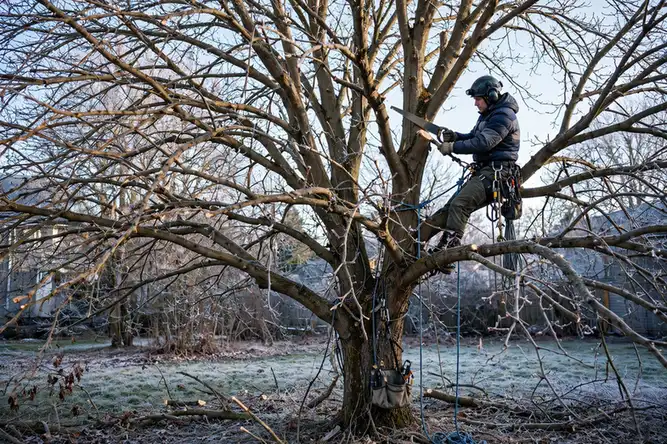
'When should I prune?' has a tidy general answer — the dormant season — wrapped around a thicket of regional exceptions that matter more than the rule. Oaks in wilt country, palms in hurricane country, flowering ornamentals everywhere: timing a cut wrong can invite the disease the pruning was meant to prevent. This guide walks the calendar honestly, region by region.
ArborReach's city pages carry the pruning window for your specific area; this guide explains the reasoning behind those windows so you can interrogate any schedule a provider proposes — including ours.
The dormant-season rule, and why it works
For most deciduous shade trees, late autumn through late winter is the kindest cutting window. The tree's energy is stored in its roots, so removed wood takes the least from it; structure is fully visible without leaves; fungal and bacterial pathogens are at their least active; and the tree meets spring ready to seal cuts with a full season of growth.
Dormancy is a Northern-hemisphere winter concept that fades as you travel south — in the warmest zones the 'dormant season' is a few cooler, drier weeks — which is why regional adjustment matters more than the slogan.
Oaks: the disease window that overrides everything
Where oak wilt is established — the upper Midwest, the Great Lakes, Texas and parts of the mid-Atlantic — oaks should be pruned only in the coldest months, when the beetles that carry the fungus to fresh wounds are inactive. Many affected cities formalise this with pruning blackout periods in spring and early summer, and emergency oak cuts in those months are sealed immediately.
If you own oaks in wilt country, this single rule outweighs every other scheduling consideration in this guide. Ask any provider proposing spring oak work in those regions to explain themselves; the good ones will already have refused the timing.
The South and Gulf: pruning before the storm calendar
In hurricane country the calendar is written by the season that starts in June. Structural pruning — deadwood out, weak unions addressed, sail reduced — belongs in late winter and early spring, finished before the tropics wake. In-season southern work is for hazards and damage, not for the annual programme.
Palms follow their own rules everywhere they grow: remove dead fronds and fruit stalks, leave the green canopy — including the horizontal fronds some trimmers strip in the infamous 'hurricane cut', which weakens the palm and protects nothing.
The West: drought, beetles and fire
Western pruning times around stress. Pines are best cut in the cold months, partly because fresh pine wounds in warm weather advertise themselves to bark beetles. In drought years, restraint is the treatment: heavy pruning of a water-stressed tree removes the canopy it needs to recover, so structural essentials only, and let the tree keep its leaves.
In fire-prone communities, pruning is also fuel management — raising canopies, separating crowns, clearing roofs — and belongs in the calendar before fire season, coordinated with the defensible-space work around the house.
Flowering trees and fruit trees: bloom first
Spring-flowering ornamentals — dogwood, redbud, lilac, most flowering cherries — set next year's buds on this year's wood within weeks of blooming. Prune them immediately after flowering; prune them in winter and you have simply removed the spring show. Summer bloomers flower on new growth and take dormant pruning happily.
Fruit trees are pruned in late winter for structure and light: an open centre or modified leader, crossing wood out, cuts that invite the sun into the canopy. The goal is reachable, ripening fruit — a different shape from a shade tree, and a reason orchard pruning is its own specialism.
The exceptions that ignore the calendar
Dead, damaged and dangerous wood comes off when it is noticed, in any month — a hanger over the driveway does not wait for dormancy. Storm-torn limbs should be cut back to clean collars promptly to limit decay. And young trees benefit from small, frequent structural corrections that barely register as 'pruning season' events at all.
What the exceptions do not license is heavy live-wood pruning of a stressed tree in the wrong season 'because the crew is here'. The calendar exists for the tree's benefit; hazard work is the only standing override.
Guide FAQs
Can I prune in summer at all?
Yes — summer is the correct time for several jobs: removing deadwood and hazards, corrective cuts on storm damage, slowing an over-vigorous tree (summer cuts check growth where winter cuts stimulate it), and work on species that resent winter cutting. What summer punishes is heavy pruning of stressed trees and any oak cutting in wilt regions. Light, purposeful summer work is normal arboriculture.
Is it true you should paint pruning cuts?
For most trees, no: research has consistently shown wound dressings do not prevent decay and can slow the tree's own sealing. The standing exception is oaks in oak-wilt regions, where fresh wounds are painted immediately to block the beetle pathway — a targeted disease measure, not a general practice. If a provider paints every cut on every tree as a premium service, you are buying paint, not protection.
How much can be pruned in one visit?
The working guideline is up to about a quarter of the live crown for a healthy tree, less for old or stressed specimens — and staged work over two seasons for trees needing major reshaping. Percentages are guides, not entitlements: a skilled arborist reads the tree in front of them. If a quote proposes stripping a mature tree 'right back' in one visit, it is describing topping with better manners.
More guides
Talk to a local tree professional today
One call connects you with an independent tree service in your area — for an assessment, a quote, or urgent help with a dangerous tree.
Call NowArborReach USA is a referral service. We connect property owners with independent local tree care professionals; we do not perform tree work ourselves.