About this service
The tree is gone, the stump remains — and it will outstay your patience. A leftover stump blocks mowing, trips guests, rules out replanting in the best spot in the yard, and in many regions quietly hosts termites, carpenter ants and fungal spread to neighbouring trees. Stump grinding is the standard fix: a specialised machine chews the stump and its surface roots into mulch, below ground level, in a single visit.
ArborReach USA connects you with local stump grinding services across the country — as a follow-up to a removal, bundled with one, or for that old stump that came with the house. This page explains how grinding works, how deep it goes, what the site looks like afterwards, and how grinding compares with full stump removal.
When grinding is the right answer
- You want to replant or re-turf the spot. Grinding clears the way for lawn, beds or — with enough depth and offset — a new tree nearby.
- The stump is a trip and mower hazard. Stumps hidden by grass catch mower blades, ankles and snowblower augers with equal enthusiasm.
- Insects have moved in. Old stumps in many regions host termite colonies and carpenter ants; removing the habitat removes the bridgehead next to your house.
- Suckers and sprouts keep coming back. Many species resprout vigorously from a living stump; grinding ends the cycle that cutting cannot.
- A fungal conk has appeared on it. Fungi fruiting on a stump mean active decay networks in the root zone — worth clearing before they reach living trees.
- You are selling or landscaping. A yard full of stumps reads as unfinished work to buyers and designers alike; grinding is the fastest tidy-up in tree care.
How the work runs
Stump assessment
The operator checks stump size and species, surface roots, and — critically — what is buried nearby: irrigation, lighting cables, septic lines and shallow utilities get marked first.
Area preparation
Rocks and debris are cleared from around the stump (they damage teeth and become projectiles), and shields go up to contain flying chips near windows and cars.
The grind
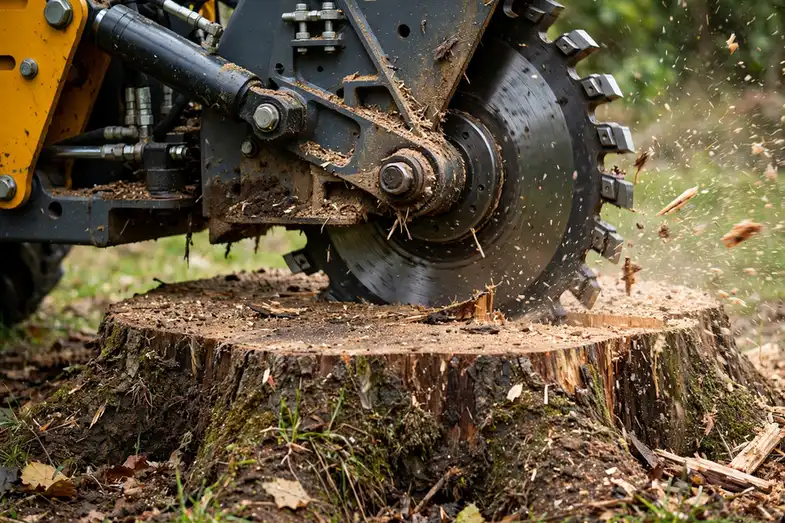
A rotating cutter wheel sweeps side to side, shaving the stump down in passes — typically six to twelve inches below grade, deeper on request for replanting.
Root tracing
Prominent surface roots radiating from the stump are chased and ground where they lift turf or crack paving.
Backfill and finish
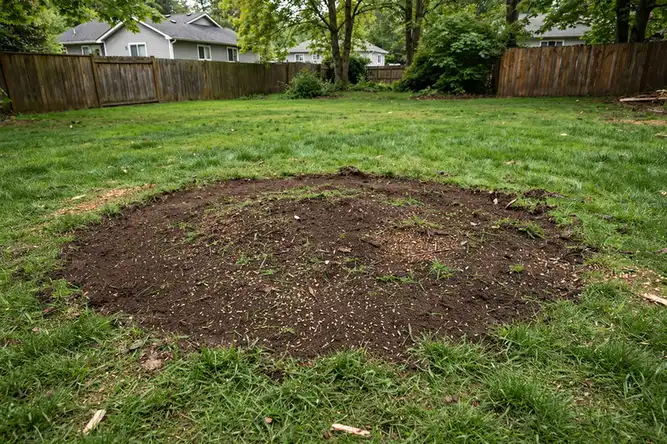
The grindings — a mix of wood chip and soil — are raked back into the hole and mounded slightly, since the fill settles. Excess grindings can be hauled away if agreed.
Site clean-up
Surrounding turf and beds are raked and blown; the area is left ready for soil, seed or planting.
In detail
Grinding vs. full stump removal
Grinding destroys the stump where it stands and leaves the deeper root system to decay in place over years — invisible, and harmless in most situations. Full removal excavates the stump and root ball entirely, which is the right choice when you are building, paving or installing a foundation over the spot, but it is heavier work that tears a far larger hole in the yard.
For the typical residential goal — lawn back, hazard gone, new planting possible — grinding achieves it in a fraction of the time and disruption. Your provider will ask what you plan for the spot, because the answer (turf, bed, new tree, driveway) decides both the method and the depth.
How deep, and what is left behind
Standard grinding runs about six to eight inches below the surrounding grade — deep enough for turf and shallow planting. For a new tree in or near the same spot, ask for a deeper grind and removal of more grindings, then backfill with fresh soil; planting a tree straight into a hole of wood chips starves it of nitrogen as the chips decay.
Expect the hole to settle over the following weeks as the fill compacts — topping it up with a bag or two of soil is normal. The buried roots beyond the grind zone decay slowly; on old, large trees you may feel a soft spot in the lawn years later where a major root finally gave up. That is normal and easily filled.
Stumps, disease and the rest of your trees
A stump is not always an innocent bystander. Some root diseases persist in old stumps and colonise new plantings through root contact, and in oak-wilt country the spore mats that form under the bark of infected red oak stumps and logs are part of how the disease spreads. In those situations a provider may recommend grinding promptly, treating the stump, or removing infected wood from the property entirely.
The practical rule: if the tree came down because of disease rather than storm or space, ask the crew what should happen to the stump and the wood — the answer is regional, and ArborReach's city pages carry the local disease picture.
Grinding day: access, shields and noise
A stump grinder is a focused machine: a cutter wheel on a swing arm, engine-driven, loud for the duration of the grind and finished surprisingly quickly. The operator will want a clear run at the stump, any nearby windows or cars shielded, and pets indoors — chips fly farther than first-timers expect, which is what the shields are for.
Gate width decides the machine: standard grinders fit through typical garden gates, and compact tracked units handle tighter access and slopes. If your stump is somewhere genuinely awkward — a terrace, a courtyard, up steps — say so when booking; arriving with the right machine is the difference between a visit and a saga.
What to do with the grindings
The mound left behind is mostly wood chip and soil, and it has honest uses: mulch for beds and around remaining trees (kept off trunks), filler for low spots once it settles, or the base of a compost mix. Used fresh and thick under new plantings it can tie up nitrogen as it decays, so the standard advice — mulch with it, don't plant into it — is worth following.
If you would rather it all left, say so at booking: haul-away of grindings plus topsoil backfill is a defined piece of scope. The one thing not to do is nothing at all with a deep mound over a future lawn — levelled and seeded is a fifteen-minute finish that saves a lumpy season.
Old stumps vs. fresh stumps
A stump ground the week the tree came down behaves differently from the five-year resident. Fresh wood grinds cleanly and the hole is one material; old stumps bring surprises — soil and stone washed into the flare, metal from a decade of garden life, rot pockets that collapse the wheel's rhythm, and occasionally a wasp tenancy that rearranges everyone's afternoon.
None of this changes the outcome, but it is why operators ask the stump's age and history. If the tree came down before you owned the house, say so: expectations about depth, debris and buried surprises are set differently, and the operator arrives with the shielding and patience the old campaigner requires.
Grinding in a finished garden
The fear is that a stump grinder will wreck the garden it came to improve. In practised hands the footprint is modest: shields contain the chips, the machine's weight is spread on tracks or wide tyres, and the grind zone is the only disturbed ground. The operator's site walk beforehand — noting the irrigation, the edging, the prize hostas — is what makes the difference between a neat hour and a restoration project.
Help by clearing the stump's surroundings of pots, ornaments and hoses, and by marking anything buried you know about. Then let the chips fly — by the time the machine is loaded, the only evidence is a tidy mound where the eyesore used to be.
Grinding versus doing nothing at all
Plenty of stumps are simply left, and sometimes that is fine: a stump in a wild corner of a large lot will soften, host fungi and beetles, feed the soil food web and disappear on its own over five to ten years. Doing nothing is a legitimate choice when the stump is out of the way, not sprouting, and not in ground you mow, plant or build on. The problems start when a leftover stump sits exactly where life happens — mid-lawn, mid-bed, mid-path.
Species matter to the decision. Tough resprouters — elm, locust, willow, many maples — treat a stump as a starting point and push up a thicket of shoots for years, so leaving them means endless cutting back. Pines and oaks mostly sit quiet. A stump grinding visit settles the question in an afternoon for any species, which is why most homeowners who start by 'just leaving it' end up grinding within a couple of seasons; the honest comparison is not grind versus forget, it is grind now versus grind later after two years of mowing around it.
The grindings: free mulch with one warning
A ground stump leaves a mound of wood grindings — often more volume than the stump suggested, because the root flare and surrounding soil come up with it. The pile is genuinely useful: spread two to three inches deep as mulch under trees and shrubs, it suppresses weeds, holds moisture and rots down into the soil over a season or two. Keep it a hand's width away from trunks and stems, and let it sit a few weeks before using it against tender plantings.
The one warning: fresh grindings tie up nitrogen as they decompose, so do not mix them into vegetable beds or new planting soil the same week — use them on the surface, where the effect is harmless. And if the stump came from a diseased tree, ask before spreading: most problems are not spread by grindings, but a few soil-borne diseases make the cautious answer 'bag and bin that pile'. Your crew will know which situation you are in from the diagnosis that brought the tree down.
What drives the scope of a grinding job
- Stump diameter. Measured at ground level including the flare — a wide hardwood stump is simply more wood to chew.
- Species and wood density. Oak and hickory grind slowly; soft pines go fast. Old, dry stumps behave differently from fresh ones.
- Depth required. A standard turf-depth grind vs. a deep grind for replanting changes machine time noticeably.
- Root tracing. Extensive surface roots across the lawn add passes beyond the stump itself.
- Access. Grinders need a gate-width path; stumps on terraces or behind walls may need a smaller machine and more time.
- Grindings disposal. Leaving the mulch in place is standard; hauling it away and backfilling with topsoil is additional scope.
Should you do it yourself?
Rental stump grinders exist, and they are the most commonly regretted rental in the category: the machines are heavy, awkward, violent when they catch, and unforgiving of buried surprises like concrete, rebar and landscape fabric. Add the call-before-you-dig utility check and the very real risk of a cutter wheel meeting an irrigation line, and most owners who price both routes find the professional visit — often done in under an hour — is the better bargain. Chemical stump rot is the other DIY route; it works in months, not days, and only softens the stump for manual removal.
Frequently asked questions
How deep does stump grinding go?
A standard grind finishes six to eight inches below grade, enough for grass and shallow beds. If you plan to plant a new tree or dig in the spot, ask for twelve inches or more and discuss removing the grindings and backfilling with soil. Tell the operator your plan before the machine starts — depth is easy to add at the time and awkward afterwards.
What is left after grinding?
A mound of grindings: wood chips mixed with soil, raked back into the hole. It settles over a few weeks. Many owners use the chips as mulch elsewhere in the garden. If you prefer, haul-away of the excess and topsoil backfill can be included in the scope — just arrange it in advance.
Will the tree grow back from the roots?
Grinding destroys the stump's growing point, so the trunk will not return. Some species send up suckers from distant roots for a season or two; these weaken and stop if you simply keep cutting them off, because the root system is no longer being fed. Persistent cases can be discussed with your provider — but endless regrowth is uncommon after a proper grind.
Can you grind a stump close to a fence, wall or foundation?
Usually, yes. Modern grinders work within inches of obstacles, and operators use shields and careful passes near structures. What they cannot do is grind through buried concrete, large rocks or metal — if your stump grew around a fence post or old footing, mention it at booking so the operator arrives prepared.
Do utilities need to be marked first?
For a standard shallow grind, the risk is less about deep utilities and more about shallow ones: irrigation lines, landscape lighting, invisible fence wire and septic components. Mention anything buried in the area, and for deeper grinds or root excavation a utility locate through the national 811 service is the safe sequence — it is free and arranged with a few days' notice.
Should I grind the stump of a diseased tree?
Often, yes — and promptly. Some fungal diseases persist in stumps and can spread to healthy trees through root contact, and in oak-wilt areas, infected stumps and logs play a specific role in the disease cycle. Ask your provider what local practice is for the disease your tree had; the answer may include treating or removing the wood as well as grinding.
How long does stump grinding take?
A typical residential stump is ground in well under an hour, including set-up and raking the site. Large, wide-flared hardwood stumps and multiple stumps stretch the visit; awkward access stretches it more. Your provider can estimate closely from the stump's diameter and a photo, which is worth sending when you book.
Can grinding damage my lawn or driveway?
The machine travels on turf without tearing it in normal conditions, though soft or wet ground may show tracks worth knowing about. The bigger risks are buried surprises around the stump — edging, irrigation, old concrete — which is why the operator walks the site first. Mention anything buried near the stump and the grind plan adapts.
Stump Grinding in top metro areas
Related services
Need stump grinding? Talk to a local professional
One call connects you with an independent tree service in your area — for an assessment, a quote, or urgent help with a dangerous tree.
Call NowArborReach USA is a referral service. We connect property owners with independent local tree care professionals; we do not perform tree work ourselves.