How to Hire a Tree Service: A Homeowner's Checklist
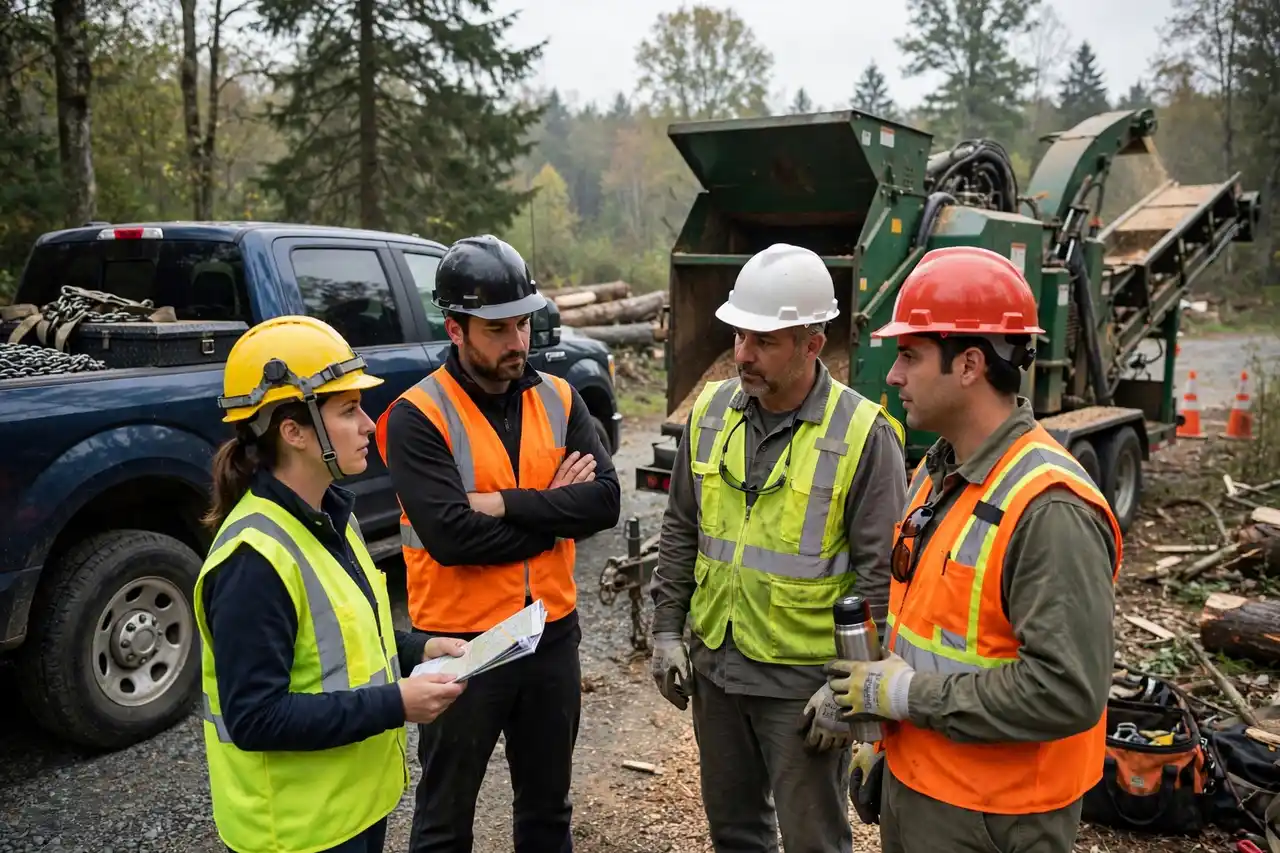
Tree work is one of the most dangerous trades in the country, performed in your garden, over your roof, priced by people whose competence you cannot judge from a truck door logo. Most bad outcomes — the topped tree, the crushed fence, the 'cash discount' crew that vanishes — are hiring failures, not tree failures. The good news: the signals of a professional operation are easy to check once you know them.
This checklist distils what arborists themselves tell their friends to ask. None of it requires you to know a branch collar from a bucket truck — only to notice whether the answers sound like a trade or a hustle.
1. Insurance and credentials: the non-negotiables
Ask for proof of liability insurance and workers' compensation cover, and expect to receive it without drama — professional companies carry certificates precisely so clients can ask. An uninsured crew's accident is the property owner's problem, and tree work generates the kind of accidents that test that principle expensively.
Credentials worth recognising: ISA Certified Arborist is the industry's baseline qualification; TCIA accreditation marks serious companies; local licences apply where your jurisdiction issues them. Not every excellent climber is certified, and not every certificate guarantees judgement — but a company with neither paper nor patience for the question is telling you something.
2. The assessment visit: what good looks like
A professional assessment happens on foot, at the tree, with questions: What is the tree doing, what stands under it, what do you want from it? Beware the quote produced from the truck window or the photograph — the defects, access problems and targets that decide the job are all visible only in person.
Expect the assessor to sometimes argue against the work you asked for: the tree that should be pruned rather than removed, the stump that does not need excavating, the cable that will not save a rotten union. Advice that costs the company a sale is the strongest quality signal in the trade.
3. Topping: the one-word disqualifier
If a provider offers to 'top' your tree — cut it back to stubs to make it smaller — end the conversation politely. Topping is condemned by every professional standard in arboriculture: it starves the tree, invites decay, and guarantees weakly attached regrowth that makes the tree more dangerous. Its correct alternative is crown reduction, and any competent provider will offer it by name.
The same instinct applies to lion-tailing (stripping interior branches) and to flush cuts and wound paint offered as premium extras. A provider fluent in the standards will happily explain their cuts; one who cannot, should not make them.
4. The written scope: get the finish in writing
Before work starts, both sides should be able to point at the same sentence describing: which trees, what work, what happens to the stump, where the wood and chips go, and what 'clean-up' means. Most disputes in tree work are finish disputes — the removal was fine; the misunderstanding was the firewood left in the drive.
Payment structure is part of the scope: reputable companies do not demand full payment in advance from residential clients, and storm-season strangers asking for cash up front are a documented hazard of their own.
5. Equipment and crew signals
You do not need to audit the kit, but the visible tells are reliable: helmets and eye protection actually worn, saws that are maintained, rigging gear rather than a rope from the hardware store, a chipper that is fed with push sticks rather than hands. Professional crews look — and sound — methodical rather than heroic.
Ask who will be on site: the person who assessed, or a crew you have never met working from a note? Either can work, but the answer tells you how the company runs, and guarantees about supervision are worth having before the climbing starts.
6. References, reviews and the local record
Longevity in one place is itself a credential in a trade full of storm-chasers. A company that has worked your area for years has neighbours you can ask, a reputation it cannot outrun, and knowledge of your city's permits and species that no itinerant crew carries.
Read reviews for the pattern, not the rating: punctuality, clean-up, communication, and how problems were handled when something went wrong. Every long record contains a bad day; professionalism is what the response looked like.
Guide FAQs
A company offered to top my tree to make it safer. Should I?
No. Topping makes trees less safe over time — the regrowth attaches weakly, decay enters at the stubs, and the tree's food factory is removed exactly when it needs strength. Ask instead for crown reduction by a provider who uses the term correctly, or a structural assessment if the tree's safety is your real concern.
Do I need an arborist, or will any tree cutter do?
For a straightforward removal of a small, clear tree, a competent insured tree service is appropriate. For diagnosis, disease, risk questions, valuable trees and anything involving saving rather than removing, you want a certified arborist's assessment first — the work crew can follow the prescription. The expensive mistake is paying for cutting when you needed thinking.
Someone knocked offering a cash deal after a storm. Risky?
It is the classic pattern for storm fraud: uninsured itinerant crews, cash in advance, work left half-done, and no one to call when the 'removed' tree's stump sprouts through your new fence. Storm urgency is real, but the checks take five minutes: insurance certificate, local address, written scope. A legitimate crew working a storm will pass all three without blinking.
More guides
Talk to a local tree professional today
One call connects you with an independent tree service in your area — for an assessment, a quote, or urgent help with a dangerous tree.
Call NowArborReach USA is a referral service. We connect property owners with independent local tree care professionals; we do not perform tree work ourselves.