A Storm Damaged Your Tree: What to Do in the First 48 Hours
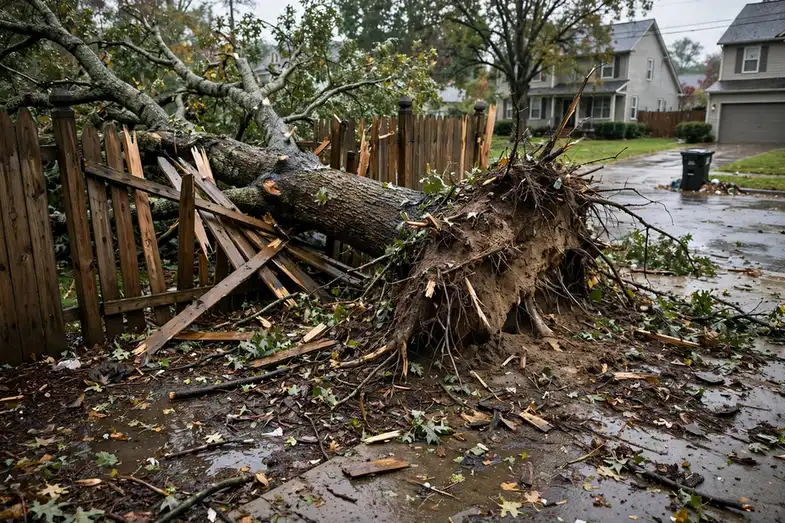
The hours after a storm are when damaged trees do their second round of harm: hangers let go, split trunks finish splitting, and well-meaning cleanup with a borrowed chainsaw meets wood under tension it cannot read. This guide is the calm sequence — safety first, documentation second, professionals third — that arborists wish every homeowner followed before touching anything.
It assumes no one is hurt and no line is down on the ground; if either is true, the first call is 911, and the second is your utility. Everything else can wait for the list below.
Hour one: make the scene safe, not tidy
Walk the property looking up, not down. Identify hangers — broken limbs still attached overhead — split trunks, new leans and lifted soil at tree bases, and treat the ground under all of them as out of bounds for family and pets. Trees under load shift without announcement, especially as ground dries and wind works them.
If a tree or limb touches a power line, keep everyone away and call the utility; if a line is down, treat the surrounding ground itself as dangerous. Gas smells, water ingress and roof breaches each have their own first call — make them; the trees will keep.
Document before anything moves
From safe positions, photograph everything: each damaged tree wide and close, the base and root plate, what the tree is resting on, and damage to structures. Insurers will ask, and storm scenes are cleaned up faster than memories. Note the time, and keep any fallen signage or markers of where things landed.
If a neighbour's tree is involved — in either direction — photograph the boundary and the tree's origin point, and have the conversation early and kindly. Documentation plus goodwill resolves most cross-fence storms without lawyers.
What not to cut
Do not cut anything that is holding something else up, anything under tension (bent trunks, trapped limbs, spring-loaded branches), anything above shoulder height, and anything you would have to stand on a ladder to reach. Storm wood stores energy in ways that standing-tree experience does not teach, and releasing it wrongly is how the second accident happens.
Loose, fully grounded small debris in open areas is the safe limit of DIY cleanup. Even then, watch for the hanger above the debris — the broken limb still in the canopy is the standard post-storm injury.
Calling for help: what to say
Tree services triage after storms: structures and access first, hazards next, cosmetics last. Help them place you correctly: what is damaged, what the tree is touching, whether access is blocked, whether lines are involved, and how many trees are affected. Photos sent in advance let the dispatcher match crew and equipment to the job in one trip.
Expect honest queues. After a regional event, every crew is working the same triage list; a company that promises instant attendance for a cosmetic job during a disaster is usually promising fiction. Book the full cleanup and the standing-tree assessment in the same call.
The assessment: saving what can be saved
When the crew walks your property, the valuable product is judgement: which wounded trees can be restored by pruning over the next two seasons, which are risks to remove now, and which quiet trees — twisted, root-cracked, silently leaning — the storm has marked for later failure. Ask for that whole-property view, in writing if the damage is extensive.
Torn limbs need cutting back to proper collars soon; jagged breaks left to 'heal' become decay columns. Root plates that lifted even slightly rarely re-anchor. Trunks with new longitudinal cracks are finished, whatever the canopy looks like. These are the calls you are paying for.
After cleanup: close the loop
Keep the invoice and the crew's notes with your insurance file. Book the follow-up the assessment recommended — restoration pruning is a two-season programme, not a slogan. And use the calm months productively: the preventive structural work and deadwood removal that this storm argued for is cheapest and best scheduled before the next season, not during it.
Finally, replant deliberately. A storm gap is a twenty-year decision made in a weekend if you let it be. Choose species for the site and the next storm, diversify rather than repeating the row that failed, and plant at proper depth — your future self, in some future storm, is the beneficiary.
Guide FAQs
The tree is down but hit nothing. Can cleanup wait?
Mostly, yes — schedule it rather than emergency-calling it. Two cautions: keep children and pets off the trunk (downed trees roll and limbs are under tension), and do not leave it for months, because settling wood, sprouting stumps and the simple difficulty of working around it all grow with time. If any part is suspended or resting on anything, waiting is off the table.
My tree split but is still standing. How urgent is it?
Treat a split trunk as urgent: the failure has started, and the next wind is a coin toss. Keep people out of the fall zone — both sides, since split trees choose directions creatively — and get an assessment at the front of the queue. Cabling a fresh split is occasionally possible; more often the honest answer is a careful, rigged removal.
Will insurance pay for the cleanup?
Typically, removal of a tree that struck an insured structure and work to prevent further damage are claimable; a tree that fell harmlessly often is not. Policies differ, documentation decides, and your insurer is the authority. Photograph before work, keep itemised invoices, and ask the crew to note the hazard reasoning on the paperwork — it is written for exactly this reader.
More guides
Talk to a local tree professional today
One call connects you with an independent tree service in your area — for an assessment, a quote, or urgent help with a dangerous tree.
Call NowArborReach USA is a referral service. We connect property owners with independent local tree care professionals; we do not perform tree work ourselves.