About this service
Stump removal is grinding's bigger sibling: instead of chewing the stump down below grade, the entire stump and root ball are excavated and taken away, leaving clear ground. It is more work, more disruption, and sometimes exactly what the project needs — when something is going to be built, paved or planted deep where the stump stands, 'mostly gone' is not gone enough.
Through ArborReach USA you can reach local services equipped for full stump extraction, from single garden stumps levered out with a mini-excavator to multi-stump clearances ahead of construction. This page explains when removal beats grinding, how the work runs, and what the site needs afterwards.
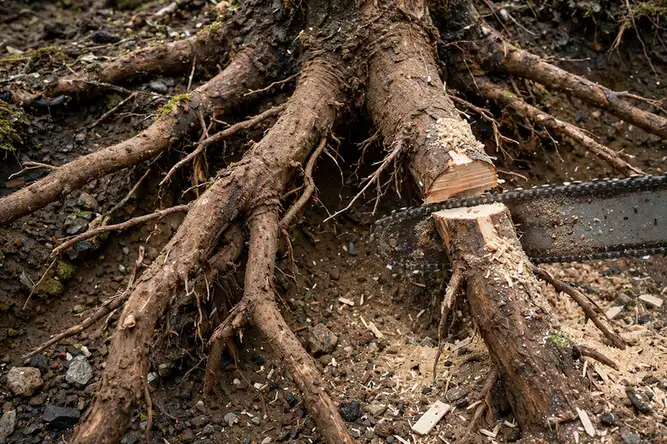
When full removal beats grinding
- Something will be built on the spot. Foundations, driveways, patios and pool shells cannot sit over a buried stump and root plate — decay eventually means voids and settlement.
- A large tree is going in the same hole. Serious replanting needs the old root ball out and fresh soil in, not a pocket of wood chips.
- The stump is already loose or heaved. A wind-thrown root plate has done half the excavation itself; extraction finishes the job cleanly.
- Disease rules require it. In some disease situations — certain root rots and wilt diseases — removing infected material from the site is the recommended sanitation step.
- Roots are invading infrastructure. Where roots are inside a sewer line, under a slab or lifting a wall, excavation addresses the cause, not just the visible stump.
- Grinding access is impossible. Occasionally a stump sits where no grinder can reach but excavation equipment can — terraces, courtyards and tight urban lots produce these cases.
How the work runs
Assessment and utility locate
The crew sizes up the stump, species and root spread, then arranges a utility locate (811) — excavation goes deeper than grinding, so buried lines must be known, not guessed.
Canopy and surface clearing
Surface roots and surrounding growth are cut back and the work area is opened up for equipment access.
Excavation around the root ball
The machine digs a trench around the stump, exposing the main structural roots so they can be cut cleanly.
Root cutting and extraction
Major roots are severed with saws and the stump is levered, winched or lifted out whole — the moment that shows exactly how much root plate was hiding underground.
Haul-away
The stump and roots leave on the truck for disposal; infected material is handled per local practice rather than chipped into garden mulch.
Backfill and grade
The hole is backfilled — ideally with decent soil, compacted in layers if anything will be built or paved — and the surface is graded to match the yard.
In detail
The hole is the real project
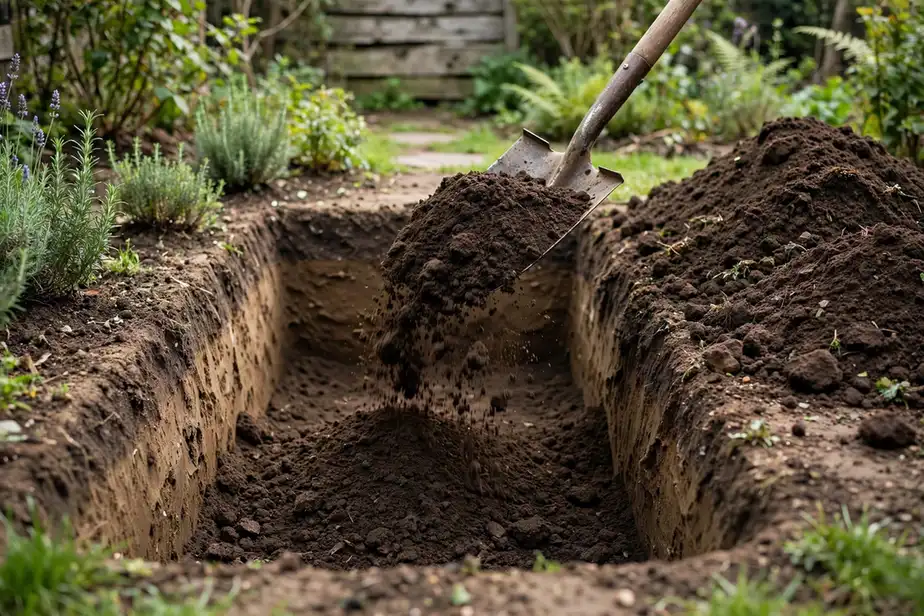
People underestimate stump removal by looking at the stump. The work is the root ball: a mature hardwood's structural root plate can span eight feet across and weigh more than a car. Excavating it leaves a hole of the same proportions, and what happens next — soil quality, compaction, drainage — decides whether the spot performs or becomes a permanent soft dip in the lawn.
If anything structural is planned, tell the crew before they backfill: builders often want the hole compacted in lifts or left for their own foundation work. For lawn and planting, a topsoil backfill slightly mounded (it will settle) is the standard finish.
Removal, disease and disposal
Where a tree died of a transmissible root disease, the infected stump and roots are a reservoir. Excavation removes that reservoir from among your remaining trees, which is why removal — not grinding — is sometimes the recommendation, particularly when you intend to replant a susceptible species nearby.
Disposal matters for the same reason: wood from wilt- or canker-diseased trees should not be chipped onto your beds or kept as firewood against the house. Professional crews know the local disposal practice; if they do not raise it, you should.
Costs in disruption, honestly counted
Full removal will disturb more ground than grinding: machine tracks, a spoil pile, a day of digging. In a finished garden that disruption has a real price beyond the invoice, which is why grinding remains the default for the majority of stumps. Removal earns its keep when the ground itself has a future job to do.
One middle path exists for multi-stump properties: extract the stumps that sit in build or planting zones and grind the rest. A good provider will walk the site with you and sort the list that way rather than selling one method for everything.
Extraction methods: machine, winch and hand
Most residential extractions are done by mini-excavator: the machine trenches around the root ball, roots are cut as they are exposed, and the stump is lifted or rolled out whole. On sites machines cannot reach, crews fall back on the older methods — digging, root cutting and winching the stump out with a ground anchor — slower, but effective and sometimes the only possible route.
Very large stumps may be split in place or cut into manageable sections before lifting; the aim is always the same: the whole structural root plate out of the ground, not a stump sawn off at soil level and quietly left — a deception worth checking for in any quote that seems too easy.
The replanting question, answered properly
Owners excavate stumps most often to replant, and the follow-through decides whether the new tree thrives. The hole is wider than the new root ball needs; backfill should be decent topsoil, not the excavated subsoil and root fragments, and the new tree goes in with its flare at grade — into soil, not into the chip-and-root mix from the old tree.
Where the old tree died of disease, the interval matters too: some soil-borne problems fade once the infected roots are out; others persist, and the planting advice changes to a resistant genus. Ask the question at the extraction visit, while the evidence is literally in front of everyone.
Difficult stumps: terraces, walls and shared boundaries
Some stumps sit in genuinely awkward architecture: terraced gardens where the machine must be craned or winched between levels, retaining walls whose footings the roots have joined, and boundary stumps whose root plates serve two properties and two opinions. These jobs are planned like the puzzles they are — sometimes hand-dug on one side and machined on the other, sometimes split and removed in sections over two visits.
Boundary stumps deserve the neighbour conversation before the excavation, not after: a root plate does not respect the survey, and the hole will visit both gardens. Handled together, one extraction serves both owners; handled unilaterally, it becomes the story the street tells for years.
After extraction: settling, soil and the next chapter
An extraction hole backfilled in a morning will settle for a season — that is physics, not poor work. Plan on a top-up pass after the first wet months, and keep heavy traffic off the fill while it consolidates. If the spot is destined for paving or a structure, the compaction conversation with your builder matters more than the extraction itself.
The opportunity inside the disruption: you are holding an open hole in ground that may not be opened again in your lifetime. Drainage corrections, a conduit for future lighting or irrigation, improved soil for the planting bed — all are trivially cheap at this moment and disproportionately expensive later. Mention your longer plans to the crew leader; good operators think this way automatically.
Excavation day: what to expect hour by hour
A stump excavation is the most construction-like of all tree work, and knowing the shape of the day removes the stress from it. The crew starts by exposing the root plate — digging or jetting soil away from the flare — then severs the major laterals, frees the plate with the excavator, and loads the whole mass out. The noisy, dusty middle of the job is the extraction itself; everything after is restoration: backfill in compacted lifts, grading, and the finish you arranged.
Access decides the equipment and therefore the day. A wide side gate admits a mid-size excavator and the work is quick and clean; a narrow gate means a mini machine, more hand digging and a longer day. Tell the estimator about septic lines, irrigation and shallow utilities when you book, not when the machine is on the lawn — locating services need a few days' notice, and a stump sitting on the utility corridor is precisely the case removal exists for.
The hole, honestly assessed
Homeowners are often surprised by the crater a full extraction leaves: a mature stump's plate can be eight feet across, and the void is real. Filling it properly is half the job's value — clean fill, compacted in layers so it does not settle into a dip by spring, capped with topsoil at the finished grade. Ask for the fill to be slightly crowned, a half-inch proud, because even well-compacted soil settles a touch.
That restored ground is then a blank canvas with unusually good soil structure at depth, which is why removal is the standard preparation for a replacement tree: plant the new tree offset from the old centre by a few feet, into the loosened, amended ground, and it establishes faster than in undisturbed soil. If the plan is lawn instead, seed or sod once the fill has had one watering and a week to settle, and expect to top-dress a shallow spot the first season — normal, minor, and the only trace the stump will leave.
What drives the scope of stump removal
- Root ball size. Species, age and trunk diameter set the excavation volume — the stump you see is a fraction of what comes out.
- Soil conditions. Rocky, compacted or waterlogged soils all slow excavation and change the equipment choice.
- Equipment access. A mini-excavator needs a path; hand-dug extractions in enclosed yards are possible but slower.
- Proximity to structures and lines. Roots under slabs, walls and utilities must be worked around or cut selectively.
- Disposal. Hauling a root ball away is part of the scope — it is heavy, dirty freight.
- Backfill standard. Loose landscape fill vs. compacted structural fill are different finishes with different effort.
Should you do it yourself?
Hand-removing a stump is famously the job that eats a weekend and then a second one: digging, chopping roots, rocking, levering — for a small stump it can be done, and for anything over about eight inches of trunk it becomes an excavation project without the excavator. The other DIY routes carry their own problems: burning is restricted in most jurisdictions and can smoulder in root systems for days, and pulling a stump with a vehicle risks a root letting go like a slingshot. If the stump matters enough to remove fully, it matters enough to price the machine version.
Frequently asked questions
What is the difference between stump removal and stump grinding?
Grinding shreds the stump in place to below soil level and leaves the deeper roots to decay naturally. Removal excavates the whole stump and root ball and takes it away. Grinding suits lawn and garden goals; removal is for building, paving, deep replanting or disease sanitation. Your provider can recommend which fits your plans for the spot.
How big is the hole afterwards?
Expect a hole noticeably wider than the visible stump — the structural root plate of a mature tree commonly spans six to ten feet. It is backfilled the same visit; if compaction for construction matters, say so beforehand, because structural backfill is a different process from landscape backfill.
Can a stump be removed near a house or wall?
Yes, with care: excavation is selective near structures, roots are cut rather than torn where they pass under slabs, and smaller equipment or hand digging is used in the tight zone. Mention retaining walls, septic systems and shallow utilities at booking — they shape the plan.
What happens to the stump and roots?
They are loaded and hauled away for disposal or processing. Wood from diseased trees is disposed of per local sanitation practice and not returned as mulch. If you want any of the trunk wood kept as firewood, agree that before extraction starts — the root ball itself is not firewood material.
Do I need utilities marked before removal?
Yes — excavation goes well below grinding depth, so a locate through 811 (free, a few days' notice) is the right sequence, and reputable crews will insist on it. Also flag private lines the locators do not mark: irrigation, septic, landscape lighting and pool plumbing.
Can I plant a new tree where the old one was removed?
After full removal, yes — that is one of its main advantages. Backfill with quality soil, give the spot a short settle period if you can, and consider species choice: if the old tree died of disease, ask whether the replacement species is susceptible to the same problem before replanting in the same soil.
How long does stump removal take?
A single accessible stump with a mini-excavator is typically a half-day piece of work including backfill; large root balls, poor access and multiple stumps extend it. The utility locate adds days before the visit, not to it — reputable crews schedule around the locate rather than digging hopefully.
Will removal crack my driveway or paths?
Roots run under hard surfaces, and extracting a root plate that has grown beneath a slab can lift or crack it. The crew will identify roots heading under paving during the assessment and cut them selectively rather than tearing the whole plate out — sometimes leaving a deep root section in place under the slab is the right engineering answer, and a good provider will explain the trade-off before digging.
Is stump removal disruptive to the rest of the garden?
It is the most ground-disturbing of the stump options, honestly stated: an excavator needs room to work, the spoil from the hole has to sit somewhere for a few hours, and the backfilled area will read as fresh earth until it is seeded or planted. Crews protect what they can — boards for machine paths, care around beds — and the disturbance is measured in days of tidiness, not seasons. If your garden is a finished showpiece and the spot has no building or replanting future, that disruption is exactly why grinding exists.
Stump Removal in top metro areas
Related services
Need stump removal? Talk to a local professional
One call connects you with an independent tree service in your area — for an assessment, a quote, or urgent help with a dangerous tree.
Call NowArborReach USA is a referral service. We connect property owners with independent local tree care professionals; we do not perform tree work ourselves.